
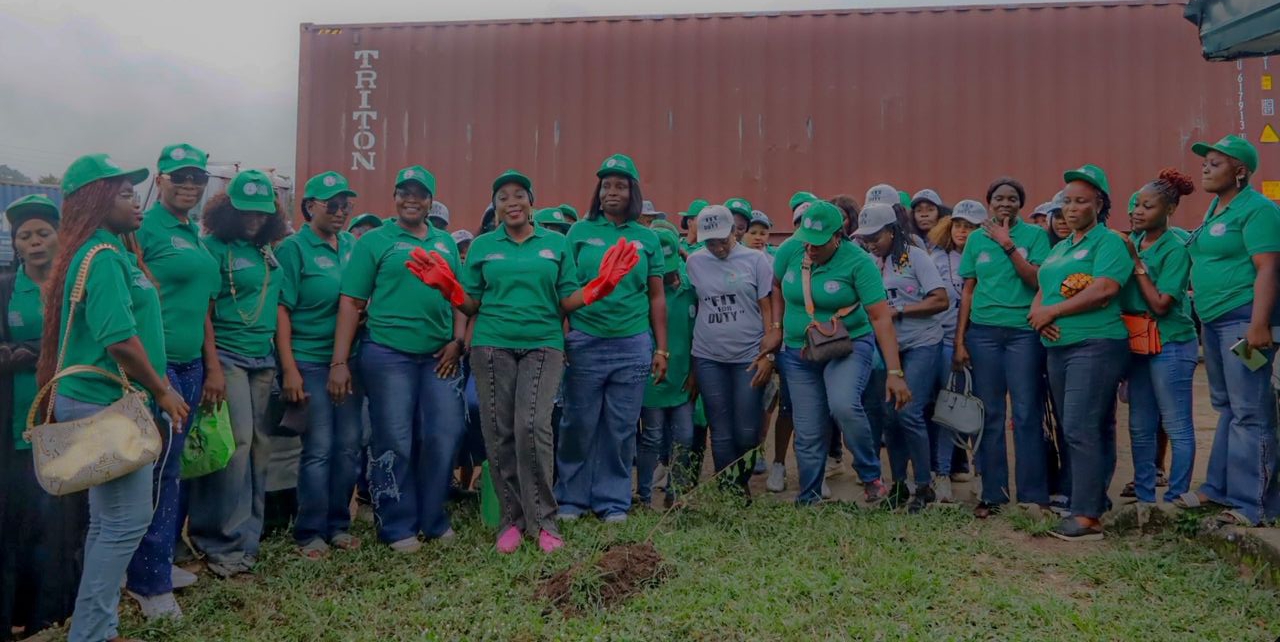



COWA IN FOU ‘C’ OWERRI DOUBLES DOWN ON GREEN BORDER INITIATIVE; AIMS TO PLANT 1000 TREES IN ONE HOUR TO TACKLE DEFORESTATION & CLIMATE CHANGE

Chairperson, Customs Officers Wives Association (COWA) FOU, Zone ‘C’ Owerri, Imo State.
In line with the initiative of the National President of the Customs Wives Association (COWA), Mrs Kikelomo Adeniyi, on the Green Border programme, that of the Federal Operations Unit (FOU) zone ‘C’ Owerri was today launched.
The COWA zone C Chairperson, Dr ( Mrs) Bolanle Balogun charged students of the Orogwe secondary school in Owerri west local government of Imo state to take active part in promoting green environment. She stated that the programme which aims to plant 1000 trees in one hour would assist in nipping deforestation in the bud while addressing the effect of climate change.

This programme by COWA FOU Zone ‘C’ led by their chairperson Dr. (Mrs) Bolanle Balogun is in fulfillment of the following objectives;
*The green border initiative meant to introduce, educate and enlighten the upcoming generation (students) and the general public on the dangers of global warming and environment degradation. An initiative introduced by the COWA National president, Mrs Kikelomo Adeniyi.
*Inform them on the need for action to address the problem in item (1) in the form of environmental sustainability
*Take part in the plant a thousand trees in one hour programme.
*Recruit green border initiative ambassadors to help realise the dream of a sustainable environment.
*Assist in renovating one block of classroom and laboratory.


According to the Chairperson, Global warming is the long-term rise in Earth’s average surface temperature, mainly caused by human activities. At its core, global warming is driven by an amplification or enhancement of the Greenhouse Effect—a natural process where certain gases in the atmosphere trap heat from the Sun and keep the planet warm enough for life.
However, she noted that humans have increased the concentration of these gases, especially since the Industrial Revolution.
What causes it? The main contributors are:
*Burning fossil fuels (coal, oil, natural gas) for energy and transport
*Deforestation (cutting down trees that absorb carbon dioxide)
*Industrial processes and agriculture

Mrs Kikelomo pointed out that these activities release greenhouse gases like carbon dioxide (CO₂), methane (CH₄), and nitrous oxide (N₂O), which trap more heat in the atmosphere.
What are the effects?
1. Global warming leads to noticeable changes in Earth’s climate system: 2. Rising global temperatures 3. Melting glaciers and polar ice 4. Sea-level rise 5. More extreme weather (heatwaves, storms, droughts) 6. Disruption of ecosystems and wildlife
Why it matters
If global warming continues unchecked, 1. it can affect food supply, water availability, human health, and entire ecosystems worldwide.
She said global warming is not just about “getting hotter”—it’s about long term changes to the planet’s climate that impact life on Earth. Environmental sustainability is the practice of using natural resources in a way that meets current needs without damaging the ability of future generations to meet theirs. It’s a key idea within the broader field of Environmental Science. In simple terms, it means taking care of the Earth so it can keep supporting life over the long term.
Key ideas behind environmental sustainability
1. Resource conservation 2. Using water, energy, forests, and minerals wisely so they don’t run out. 3. Pollution reduction
4. Limiting air, water, and soil pollution to protect ecosystems and human health. 5. Biodiversity protection
6. Preserving plants, animals, and ecosystems so nature stays balanced. 7. Climate stability 8. Reducing activities that contribute to Climate Change, such as burning fossil fuels.

Everyday examples
1. Using renewable energy like solar or wind 2. Recycling and reducing waste 3. Conserving water (e.g., fixing leaks, using less) 4. Choosing sustainable products (like reusable items instead of single-use plastics) 5. Protecting forests and wildlife habitats.
Why it matters. Without environmental sustainability,
She said natural systems can break down—leading to problems like resource shortages, extreme weather, and loss of biodiversity. Maintaining sustainability helps ensure a healthy planet, stable economies, and better quality of life for everyone