

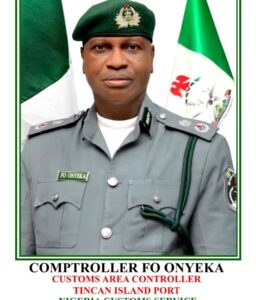


COMPT ONYEKA HEADLINES TIN CAN COMMAND AS ONE OF CUSTOMS MOST EFFICIENT OPERATIONAL HUBS


By Timothy Paul Okorocha
At Tin Can Island Port, performance is no longer driven by enforcement alone but by a deliberate alignment of people, processes and partnerships. Under Comptroller Frank Okechukwu Onyeka, stakeholder collaboration has become a strategic lever transforming compliance into revenue and coordination into control, positioning the Command as one of the Nigeria Customs Service’s most efficient operational hubs.
While headline figures such as the N120.46 billion generated in February 2026 underscore operational success, a closer examination reveals that sustained interaction with critical actors across the maritime value chain has been central to those outcomes.
Onyeka’s leadership approach places engagement at the heart of enforcement. Regular consultations with freight forwarders, customs licensed agents, terminal operators and importers have helped recalibrate the compliance environment at Tin Can Island Port. Rather than relying solely on punitive measures, the Command has prioritized clarity in procedures, improved communication channels and predictability in decision-making.
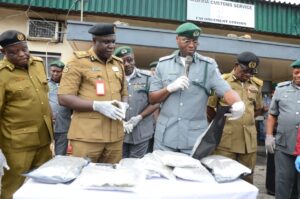

This strategy has yielded measurable dividends. Stakeholders who previously operated within opaque systems are now more inclined toward voluntary compliance, reducing disputes and accelerating cargo clearance timelines. In a port ecosystem where delays often translate to revenue leakages, this alignment between regulator and operator has strengthened both efficiency and accountability.
A defining feature of Onyeka’s engagement model is its institutional depth. His interactions extend beyond routine stakeholder meetings to structured collaborations with industry associations such as freight forwarding groups and port user bodies. These engagements have created feedback loops that allow the Command to identify operational bottlenecks in real time and respond with targeted interventions.
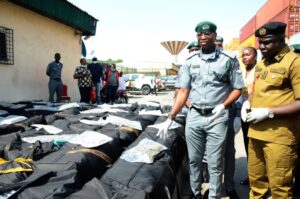
Such responsiveness has proven critical in anti-smuggling efforts. Intelligence sharing between Customs and industry operators has enhanced the detection of suspicious consignments, while improved documentation practices among compliant traders have narrowed opportunities for concealment and under-declaration. The result is a more transparent trade environment where illicit activities face increasing constraints.
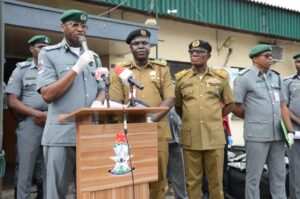

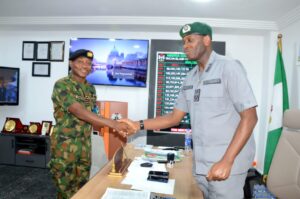
Equally significant is Onyeka’s coordination with other government agencies operating within the port. Multi-agency collaboration involving regulatory and security institutions has helped streamline inspections, reduce duplication of roles and ensure that enforcement actions are both swift and consistent. This integrated approach has strengthened the overall control architecture of the port, making it more difficult for illicit trade networks to exploit institutional gaps.
Technology has further reinforced these partnerships. The deployment of systems such as the Vehicle Identification Number valuation platform has not only improved accuracy in duty assessment but has also built confidence among importers who now operate within clearer valuation frameworks. By reducing human discretion, the Command has minimized friction points that often strain relationships between Customs and port users.
Onyeka’s engagement philosophy also recognizes the strategic role of information management. His decision to convene capacity-building sessions for maritime journalists reflects an understanding that transparency and public awareness are critical to institutional credibility. A well-informed media ecosystem contributes to balanced reporting, which in turn reinforces stakeholder confidence and discourages misinformation that can undermine compliance.
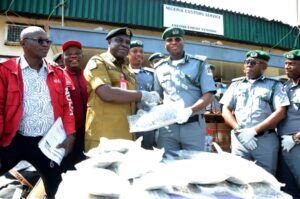
Industry observers note that this layered engagement model has contributed directly to revenue growth. When stakeholders understand processes, trust enforcement mechanisms and see consistency in application, compliance improves organically. This reduces the cost of enforcement while expanding the revenue base, a dynamic clearly reflected in the Command’s performance trajectory.
Beyond immediate gains, the long-term implications are significant. By institutionalizing collaboration, Onyeka is embedding a culture of shared responsibility within the port environment. Customs is no longer perceived solely as an enforcement authority but as a coordinating hub within a broader trade facilitation ecosystem.
This shift is particularly relevant as Nigeria seeks to optimize non-oil revenue streams. Ports remain critical gateways for economic activity, and their efficiency depends largely on the quality of relationships between regulators and operators. Tin Can Island Port’s experience suggests that leadership anchored on engagement can unlock both compliance and growth.

Onyeka’s record demonstrates that effective customs administration in complex environments requires more than strict controls. It demands the ability to align interests, build trust and sustain dialogue across diverse stakeholder groups.
In Tin Can Island Port, that approach is not only shaping operational outcomes but redefining how collaboration can drive enforcement success and revenue resilience in Nigeria’s maritime sector.