




AN INSIDER’S ASSESSMENT OF COMPTROLLER OSHOBA’S ADMINISTRATION AT THE PREMIER CUSTOMS COMMAND, APAPA; 10 MONTHS RUNNING

CG of Customs, Bashir Adewale Adeniyi MFR, PhD
BY Timothy Paul Okorocha
When Nigeria’s economic story is eventually told through the prism of trade, the Apapa Area Command of the Nigeria Customs Service will almost certainly occupy a prominent chapter.
As the nation’s busiest seaport command, Apapa is more than a revenue centre; it is the gateway through which a significant portion of Nigeria’s imports and exports flows, making its operational health a reliable indicator of the country’s commercial pulse.
This reality has become even more evident under the leadership of Comptroller Emmanuel Oshoba. Since assuming office, Oshoba has pursued an operational philosophy that seeks to strike a delicate balance between robust revenue collection, intelligence-driven enforcement, stakeholder engagement, and trade facilitation.

The results recorded in recent months suggest that the command is steadily consolidating its position as a strategic driver of economic growth rather than merely a collector of government revenue.
For years, discussions about Customs performance have revolved almost exclusively around the amount of revenue generated or the value of contraband intercepted. While these remain vital performance indicators, they no longer tell the complete story. Modern Customs administrations are increasingly evaluated by how effectively they facilitate legitimate trade, improve cargo movement, support industrial productivity, and enhance national competitiveness.
It is within this broader context that Apapa Command’s recent operational trajectory deserves attention.
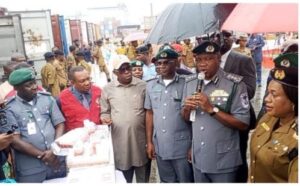
The command has continued to demonstrate impressive capacity in revenue generation without compromising its statutory responsibility to combat smuggling, revenue leakages and other forms of economic sabotage. Behind the impressive figures lies a disciplined operational framework that emphasizes compliance, intelligence gathering, post-clearance verification, and stronger collaboration with licensed customs agents, freight forwarders, terminal operators and other stakeholders.
Perhaps the most remarkable aspect of Oshoba’s administration is its appreciation that sustainable revenue growth is rarely achieved through aggressive enforcement alone. Rather, it flourishes in an environment where traders have confidence in transparent procedures, predictable decision-making and professional engagement.
This growing confidence has encouraged higher levels of voluntary compliance among compliant importers, reducing unnecessary disputes while allowing Customs officers to focus more effectively on high-risk cargo and organised attempts at revenue evasion.
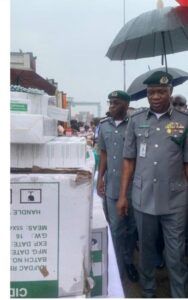
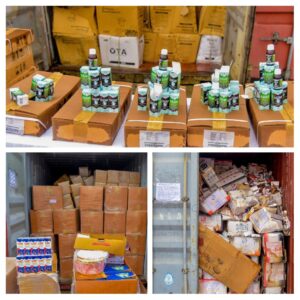
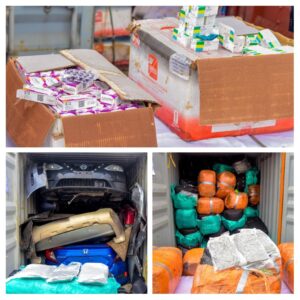
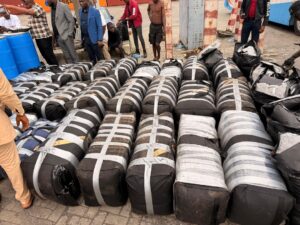
The command has equally maintained vigilance against illicit trade. Intelligence-led interventions continue to target prohibited imports, undervaluation, false declarations and other violations capable of undermining government fiscal policies. Such operations reinforce the credibility of Customs enforcement while protecting legitimate businesses from unfair competition.
Yet, even the most efficient Customs administration cannot single-handedly overcome every challenge confronting Nigeria’s maritime trade.
The persistent traffic bottlenecks around Apapa remain a costly burden on commerce. Despite improvements in traffic management over recent years, the movement of cargo from the port to factories, warehouses and inland destinations still encounters avoidable delays arising from inadequate road infrastructure, logistics constraints and the limited integration of rail transport into cargo evacuation.
Each additional day that cargo remains trapped within the port ecosystem translates into higher demurrage, increased terminal charges, rising transportation costs and ultimately higher prices for consumers. These costs weaken the competitiveness of Nigerian businesses in both domestic and international markets.
Equally important is the need to deepen digital transformation across the port environment. Although the Nigeria Customs Service has made significant progress in automating several processes, the full benefits of digital trade can only be realised when all government agencies operating within the ports embrace seamless electronic integration.
The successful implementation of the National Single Window (NSW) initiative therefore represents one of the most critical reforms capable of complementing the operational gains already being recorded at Apapa. A truly integrated digital platform would reduce duplication, minimise human interface, improve transparency and significantly shorten cargo clearance timelines.
Stakeholders have consistently maintained that Customs reforms yield greater impact when accompanied by similar improvements across terminal operations, shipping companies, regulatory agencies and port service providers.
Efficient trade depends on the performance of the entire logistics chain, not on one institution alone.
This is where Oshoba’s stakeholder engagement strategy has continued to attract commendation.

By sustaining regular consultations with freight forwarders, importers, shipping operators and other industry players, the command has helped build mutual understanding capable of resolving operational concerns before they escalate into major disputes.
Such dialogue contributes to a more predictable trading environment, one of the fundamental ingredients required to attract investment and stimulate economic expansion.
The importance of Apapa Command extends beyond Lagos. Every improvement in cargo clearance efficiency strengthens supply chains serving manufacturers across Nigeria. Faster clearance reduces production costs, improves inventory management and supports industries that rely on imported raw materials, machinery and industrial equipment.
Likewise, exporters benefit from efficient Customs procedures that enable Nigerian products to reach international markets more competitively. As the African Continental Free Trade Area (ACfTA) gathers momentum, the efficiency of Nigeria’s busiest port command will increasingly influence the country’s ability to maximise opportunities presented by regional trade integration.
Another defining feature of Oshoba’s administration has been its insistence on professionalism. Officers are continually challenged to combine operational firmness with ethical conduct and respect for legitimate business interests. This balance remains essential in sustaining public confidence in Customs administration.
Nevertheless, there remains room for improvement. Cargo examination processes can become even more technology-driven through wider deployment of non-intrusive inspection systems. Intelligence sharing among security agencies requires continuous strengthening.

Infrastructure around the port corridor demands sustained government investment, while multimodal cargo evacuation through rail and inland dry ports should receive renewed policy attention.
Similarly, ongoing capacity development for Customs personnel will become increasingly important as global trade embraces artificial intelligence, advanced risk management systems, blockchain documentation and more sophisticated supply chain security mechanisms.
The emerging picture is encouraging. Apapa Command is gradually redefining success beyond headline revenue figures. Its evolving operational culture reflects a broader understanding that Customs administration is fundamentally about enabling economic growth while protecting national interests.
In many respects, the command has demonstrated that effective Customs management is measured not only by the amount collected into government coffers but also by the confidence it inspires among investors, the efficiency it introduces into supply chains, and the competitiveness it creates for the national economy.

As Nigeria continues its search for sustainable economic diversification, institutions that facilitate commerce will become increasingly important. The Apapa Area Command, under Comptroller Emmanuel Oshoba, appears determined to position itself at the forefront of that national objective.
The journey, however, cannot end at the Customs gate. Achieving globally competitive ports will require sustained collaboration among government agencies, infrastructure managers, terminal operators, shipping companies and the private sector. Only through such collective commitment can the impressive operational strides being recorded at Apapa translate into broader economic transformation.
For now, the command has shown that beyond revenue lies a greater mission—the creation of an efficient, transparent and competitive trading environment capable of supporting Nigeria’s economic aspirations.
This, perhaps, is the most significant measure of its progress.