



CUSTOMS, NAFDAC DEEPEN PARTNERSHIP AGAINST COUNTERFEIT PHARMACEUTICALS IN SOUTHWEST
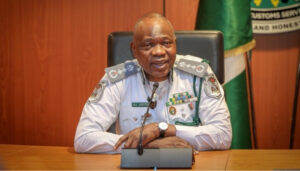
The Nigeria Customs Service (NCS) and the National Agency for Food and Drug Administration and Control (NAFDAC) have renewed their commitment to curb the movement of fake, substandard, and counterfeit pharmaceutical products across the Southwest.
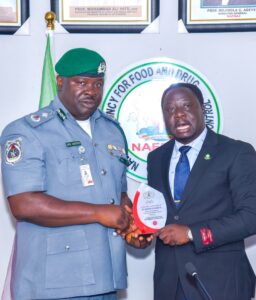
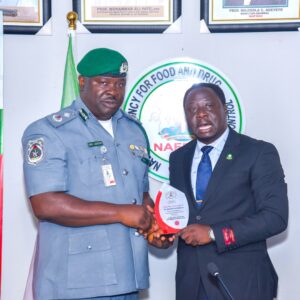
The renewed resolve was made on Tuesday, 17 November 2026, during a working visit by the Acting Comptroller of the Federal Operations Unit, Zone A, Ikeja, Lagos (FOU Zone A), Deputy Comptroller of Customs Oladapo Afeni, to the NAFDAC Investigation and Enforcement Directorate headquarters in Apapa, Lagos.
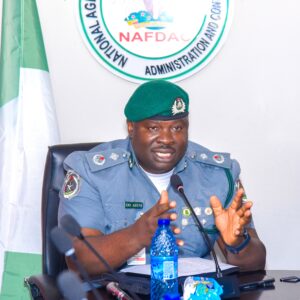
Speaking during the engagement, Afeni reaffirmed the Unit’s commitment to inter-agency collaboration in the fight against the illicit movement of fake and substandard pharmaceutical products, stressing that such products pose serious risks to public health and national security.
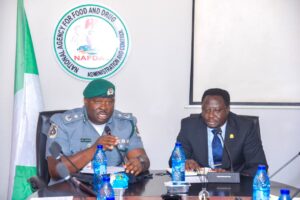
“Your work requires the collective support of everyone for you to succeed, because every single fake product that finds its way into the public poses a serious threat to our society,” he said. “We are here to support you, and I assure you that our doors are open to you.”
Afeni also commended NAFDAC for its continued efforts to safeguard Nigerians against the dangers of counterfeit and substandard food, drugs, cosmetics, and other regulated products.
In his response, the Director of NAFDAC’s Investigation and Enforcement Directorate, Dr. Iluyomade Martins, fsi, appreciated the visit and described it as a “friendship visit,” owing to the existing personal relationship between himself and the Acting Comptroller.
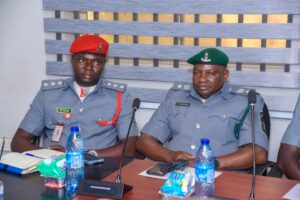
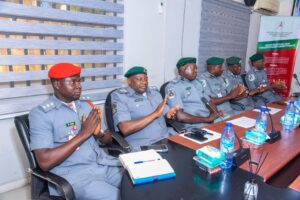
He noted that closer cooperation between NAFDAC and the Nigeria Customs Service owing to the memorandum of understanding (MOU) sign between the two agencies had continued to enhance the effective enforcement of relevant laws and strengthen the fight against economic sabotage and threats to public health.
Dr. Martins identified key areas of collaboration that would help the agencies effectively tackle the activities of criminal networks involved in the illicit trade.
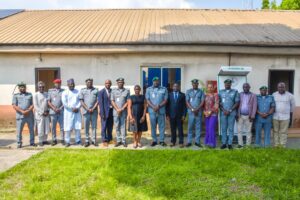
The two agencies reaffirmed their commitment to working together through timely information exchange, joint intelligence-driven operations, and coordinated enforcement actions against individuals and networks engaged in the importation, warehousing, distribution, and sale of prohibited or unwholesome products.
The visit underscored the importance of inter-agency cooperation in promoting a safer, healthier, and more secure society for all Nigerians.